Flash Flood and Storm Water Cleanup in Summerfield
Summerfield sits inside the Reedy Fork and Jordan Lake watersheds, and a hard storm can send muddy runoff into a garage or lower level. Crews remove the water and silt, then clean and dry.
(888) 578-4720Call about flood water in Summerfield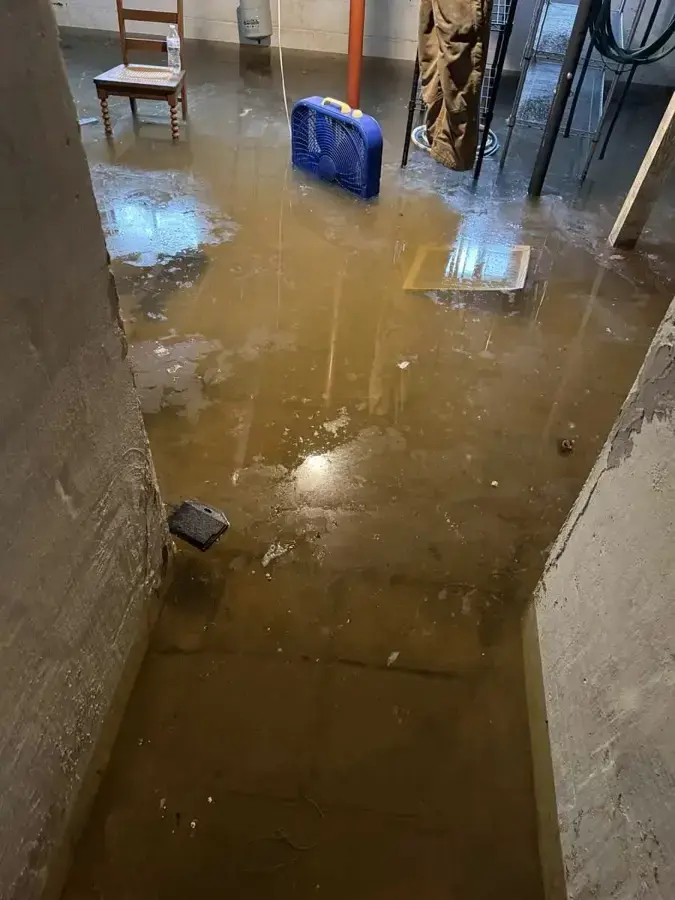
First steps for storm and flash flood cleanup in Summerfield
- 01
Stay out of flood water
Moving water carries debris, and wet outlets or a panel can be energized.
- 02
Cut the power
Switch off the main breaker only if the panel is dry and reachable.
- 03
Photograph the water line
Capture high-water marks, damaged contents and the house exterior before cleanup begins.
- 04
Call for pump-out
Report the water depth and the rooms affected so the crew can plan pumps and sanitizing.
How storm and flash flood cleanup is handled in Summerfield
Flood water from a storm is not clean water. It carries soil, bacteria and whatever it crossed on the way to the house, so the cleanup removes more material and sanitizes more surfaces than a pipe leak does.
What does storm and flash flood cleanup cost in Summerfield, NC?
Shallow storm water in a garage or one room costs the least. A finished lower level costs more because carpet, pad and drywall come out, and deep water across several levels pushes the job into the top range.
Garage or one room
- Shallow muddy water
- Silt shoveled out
- Surfaces washed and dried
Carpeted lower floor
- Carpet, pad and drywall out
- Sealed work area, HEPA air
- Slab and framing dried
Several levels, deep flood
- Water rose past outlets
- Most porous items discarded
- Long drying period
Ranges are typical, not a quote: the water category, square footage, material class and how fast drying started move the number most. Run the water damage cost calculator for a closer range.
The storm and flash flood cleanup process, start to dry
The tech who does the walkthrough maps moisture before any equipment goes down, so the drying plan matches what is actually wet.
- 1
Pump
Water is pumped out in stages and silt is shoveled out.
- 2
Remove
Carpet, pad, insulation and wet drywall that mud reached are bagged and removed.
- 3
Sanitize
Surfaces are washed and treated with antimicrobial products.
- 4
Dry
Dehumidifiers and air movers run until readings reach dry.
Watersheds and local rules
Summerfield enforces watershed rules for both the Reedy Fork and Jordan Lake areas, and town code restricts development in floodplains and special flood hazard areas. Where a property sits relative to those areas affects what rebuilding needs.
- Ask the Summerfield Planning Department about floodplain rules
- A Development Clearance Certificate comes before permit applications
- Guilford County issues the building and plumbing permits
Knowing the rules before ordering new materials avoids stalls once drying is finished.
What gets removed
Porous materials soaked by storm water, such as carpet, pad, insulation and drywall, are removed because mud and bacteria settle into them. Hard surfaces are shoveled out, washed and treated with antimicrobial products.
Silt left behind dries into a fine dust that irritates the lungs, so it is cleaned up while still damp.
Drying a flooded structure
Slabs, framing and wall cavities stay wet long after the water is pumped out. Dehumidifiers and air movers run for days, with moisture readings from the slab and framing deciding when the structure is dry. A written drying log documents the progress for the carrier.
Trade fact: Storm water is treated as contaminated no matter how clear it looks, because bacteria cannot be seen, and that classification drives how much material is removed.
Storm and flash flood cleanup across Summerfield and nearby areas
Storm water calls reach all of Summerfield, including Providence Glen, Tuscany at Henson Meadows and homes along Strawberry Road and NC 150, inside ZIP code 27358.
The same service nearby: storm and flash flood cleanup in Kernersville, Stokesdale, Oak Ridge.
Water damage restoration in Summerfield · every neighborhood covered
Related water damage services in Summerfield
Storm and Flash Flood Cleanup questions in Summerfield, NC
Still dealing with it?
Storm water left in a house keeps spreading contamination until it is pumped out.
(888) 578-4720Call about flood cleanupIs storm flood water safe to touch?
No. It carries bacteria, soil and chemicals from the ground it crossed, so protective gear is needed and nobody should wade in without it.
Will homeowner insurance cover a flash flood?
Often not. Standard homeowner policies commonly exclude surface flood water, which is covered by separate flood insurance, so the adjuster should be told how the water entered.
Do carpet and drywall survive a flood?
Not usually. Carpet, pad and drywall soaked by storm water are removed because mud and bacteria settle in them and cannot be cleaned out reliably.
Do floodplain rules affect rebuilding?
Where a property falls relative to a floodplain can change what rebuilding requires, and the Summerfield Planning Department can confirm what applies.
How long until a flooded area is dry?
Most storm water losses need several days of drying, and the timeline depends on water depth, materials and airflow.
Get the storm water out
Report the depth and the rooms affected, and the crew plans pumps, removal and sanitizing.
(888) 578-4720Call a crew now