Crawl Space Water Damage in Kernersville, NC
24/7 crawl space water damage help in Kernersville. The mitigation team pumps out water under the house, pulls soaked insulation and dries the joists and subfloor before the floor above cups or sags.
(888) 578-4720Water in the crawl space? Call now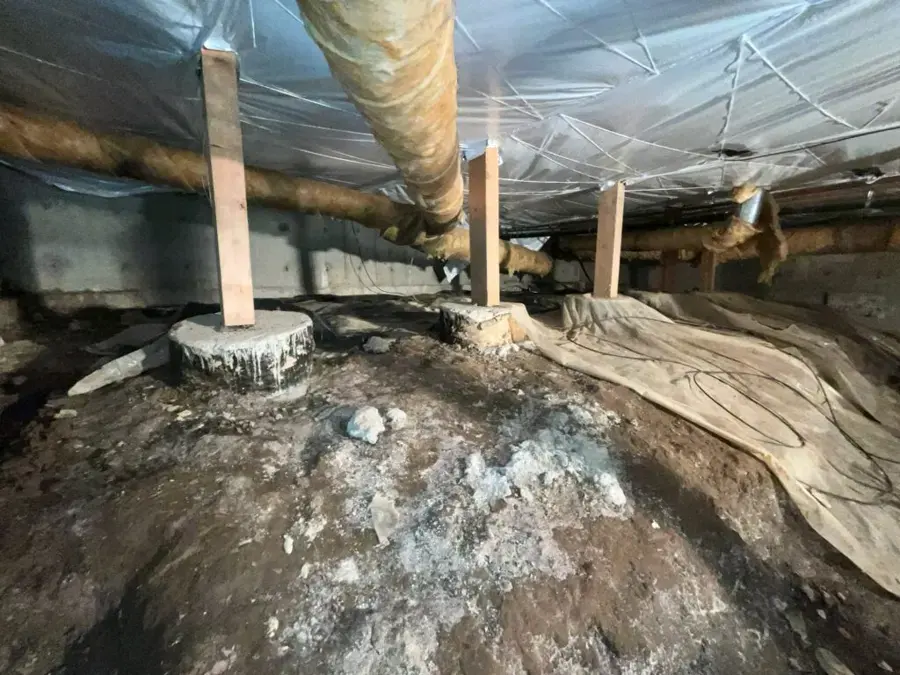
First steps for crawl space water damage in Kernersville
- 01
Shut off the water
If a pipe is leaking under the house, close the main shutoff right away.
- 02
Stay out of deep water
Do not crawl into standing water near wiring, a furnace or a ductwork run.
- 03
Check the floor above
Note soft spots, cupping boards or musty smells in the rooms over the wet area.
- 04
Call for a pump-out
Water under a house keeps the framing wet for weeks if it is not removed and dried.
How crawl space water damage is handled in Kernersville
Most Kernersville homes stand over a crawl space, and that space is where a lot of water damage hides. A pipe that splits under the house, a supply pipe that drips for weeks or a thunderstorm that sends runoff through the foundation vents can soak the space long before anyone upstairs notices.
What does crawl space water damage cost in Kernersville, NC?
Crawl space water damage in Kernersville typically runs $1,200 to $3,500 to pump out clean water and dry the framing, and $3,500 to $8,000 when soaked insulation and the vapor barrier have to come out.
Pump-out and drying
- Clean water, caught early
- Insulation still dry
- Dehumidifier under the house
Insulation and barrier removal
- Wet batts pulled down
- Vapor barrier replaced later
- Joists and subfloor dried
Sewage or storm water
- Category 3 under the house
- Contaminated soil surface treated
- Antimicrobial before drying
Ranges are typical, not a quote: the water category, square footage, material class and how fast drying started move the number most. Run the Kernersville water damage cost calculator for a closer range.
The crawl space water damage process, start to dry
The tech who does the walkthrough maps moisture before any equipment goes down, so the drying plan matches what is actually wet.
- 1
Inspect
The tech maps moisture on joists, sill plates and subfloor with meters and thermal imaging.
- 2
Pump and remove
Standing water comes out, then wet insulation and torn vapor barrier.
- 3
Dry
Air movers and a dehumidifier run under the house with the vents closed.
- 4
Verify
Daily readings continue until the framing meets the dry goal.
Why crawl spaces in the Triad take on water
Piedmont red clay drains slowly, so heavy rain sits against the foundation and seeps through block walls and vents. Vented crawl spaces also pull in humid summer air, which condenses on cool ducts and pipes.
- Frozen or split supply pipes running under the floor
- Drain leaks from bathrooms and kitchens above
- Rain runoff entering through vents and block walls
- Condensate from HVAC ducts and air handlers
Pump-out, removal and drying under the house
The mitigation team pumps standing water off the vapor barrier first. Fiberglass batts that hang wet between the joists lose their value and hold water against the wood, so they come down, along with a torn or flooded vapor barrier.
The drying team then closes the vents, sets air movers along the joist bays and runs an LGR or desiccant dehumidifier under the house. Readings are taken on joists, sill plates and subfloor every day.
Keeping the floor above sound
Hardwood laid over a wet crawl space cups as the bottom of each board swells. Drying from below, along with air movement in the room, usually lets the wood settle. NC State Extension publishes research on Southeastern crawl space moisture, and the EPA indoor air quality pages explain why damp crawl space air reaches the living space.
- Joists and sill plates read to a dry reference
- Subfloor dried before flooring decisions
- Photos and readings logged for the adjuster
Trade fact: wet fiberglass insulation in a crawl space rarely dries back to useful condition, so it is usually removed and replaced after the framing reads dry.
Crawl space water damage across Kernersville and Forsyth County
The Kernersville restoration crew covers ZIP 27284 and 27285, from the older houses around downtown and Main Street to the Union Cross, Piney Grove and Macy Grove subdivisions.
Nearby coverage reaches Walkertown, Colfax, Wallburg, Oak Ridge, Stokesdale.
Related water damage services in Kernersville
Crawl Space Water Damage questions in Kernersville, NC
How do I know there is water in my crawl space?
Musty smells, cupping hardwood, a soft floor, higher humidity indoors or a jump in the water bill are common signs. A look under the house with a flashlight confirms it.
Can wet crawl space insulation be dried?
Rarely to a useful condition. Wet fiberglass batts sag and hold water against the joists, so they usually come out and get replaced after drying.
How long does a crawl space take to dry?
Most take three to seven days once water is pumped out and a dehumidifier runs with the vents closed. Heavy, cold framing can take longer.
Is crawl space water covered by insurance?
Water from a sudden pipe break is often covered; groundwater and seepage usually are not. Coverage depends on your policy, so check with your own insurer.
Why close the vents during drying?
Humid outdoor air entering through open vents slows drying. Closing them lets the dehumidifier pull moisture out of the framing instead of the weather.
Does crawl space water cause mold?
Wet wood and insulation can start growing mold within 24 to 48 hours, which is why fast pump-out and drying matter.
Will my hardwood floor recover?
Boards that cupped from a wet crawl space often flatten as the subfloor dries. Boards that crowned or split may need replacing after readings say dry.
Wet crawl space in Kernersville? Call before the floor cups.
Pump-out, insulation removal and joist drying under the house, around the clock.
(888) 578-4720Kernersville crawl space help, 24/7