Crawl Space Water Cleanup for Summerfield Houses
Heavy rain and poor drainage around a house can leave water sitting under the floor, where it soaks insulation and joists unseen. Crews pump it out, remove wet batts and dry the framing.
(888) 578-4720Call about crawl space water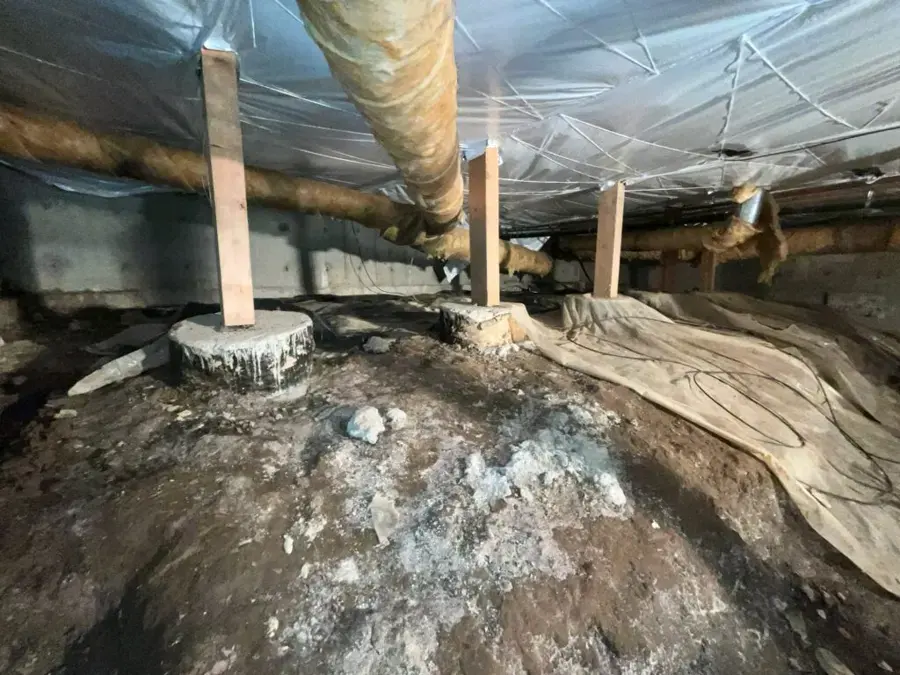
First steps for crawl space water damage in Summerfield
- 01
Stay out of the space
Do not crawl in with standing water present, since wiring, ducts and sharp debris may be underwater.
- 02
Check the source
Look for a dripping pipe, a failed water heater or a downspout dumping beside the foundation, and shut off what you can.
- 03
Note the signs
Spongy floors, a musty odor and puddles near vents are worth describing to the dispatcher.
- 04
Arrange access
Clear the access panel or door and keep pets away so the crew can set pumps right away.
How crawl space water damage is handled in Summerfield
A crawl space collects water quietly. Heavy rain, a failed pipe or a clogged downspout can put water under a floor with no sign inside until the floorboards feel soft or a musty smell appears. A flashlight check from the access door is where the assessment starts.
What does crawl space water damage cost in Summerfield, NC?
A pump-out on a clean-water leak costs the least. Removing insulation and the vapor barrier adds labor, and storm water or sewage under the house pushes the job to the top of the range because of treatment before drying.
Pump-out and dry
- Supply leak caught early
- Batts untouched
- Dehumidifier under the floor
Insulation removal
- Soaked batts bagged
- Barrier replaced afterward
- Framing dried to readings
Storm water or sewage
- Contaminated soil treated
- Antimicrobial applied first
- Longer containment and drying
Ranges are typical, not a quote: the water category, square footage, material class and how fast drying started move the number most. Run the water damage cost calculator for a closer range.
The crawl space water damage process, start to dry
The tech who does the walkthrough maps moisture before any equipment goes down, so the drying plan matches what is actually wet.
- 1
Inspect
A technician checks for standing water, wet batts and soft framing, then reads joist moisture.
- 2
Pump
Water is pumped from low spots, and soil is treated if the source was contaminated.
- 3
Remove
Wet insulation and damaged barrier sheeting come out, leaving framing open to airflow.
- 4
Dry
Dehumidifier and air movers run until readings from joists and subfloor match the dry standard.
Where the water comes from
Runoff from a heavy storm is the usual cause, especially where grading or gutters send water toward the foundation. A leaking supply pipe, a failed water heater or a drain pipe can also fill the space from above.
- Clean supply water is pumped out and the space dried
- Storm runoff carries soil and is treated as contaminated, as in storm flood cleanup
- Sewage from a drain break needs full containment
Knowing which category of water is involved is the first call, because it decides whether insulation and soil need antimicrobial treatment before drying starts.
What stays wet longest
Fiberglass batts hold water against the subfloor, and the joists and sill plates soak it up slowly, so a space that looks dry on top can still be damp underneath. Soil and a torn vapor barrier slow drying even more.
Wet insulation is pulled down and bagged, since it rarely dries once it sags.
How the space gets dry again
After pump-out, a dehumidifier sized to the space runs with air movers pointed at the joists. Readings taken from the framing itself tell the crew when the equipment can leave.
- Standing water pumped out first
- Wet batts removed and bagged
- Dehumidifier and air movers set below the floor
Trade fact: A vapor barrier laid over the soil limits how much ground moisture rises into the space, but it needs to be replaced after a loss if it was torn or soaked.
Crawl space water damage across Summerfield and nearby areas
Wherever a house sits over a crawl space, crews serve The Vineyards at Summerfield, Henson Farms, Tuscany at Henson Meadows and the roads off Pleasant Ridge Road, ZIP code 27358.
The same service nearby: crawl space water damage in Kernersville, Stokesdale, Oak Ridge.
Water damage restoration in Summerfield · every neighborhood covered
Related water damage services in Summerfield
Crawl Space Water Damage questions in Summerfield, NC
Still dealing with it?
Water under a house keeps soaking joists and insulation until pumped out.
(888) 578-4720Call for a pump-outIs water in a crawl space dangerous for the house?
Yes, over time. Wet joists and subfloor can soften, insulation stops working, and damp air can rise into living space. Quick pumping and drying limit the damage.
Why would a crawl space flood after heavy rain?
Runoff that cannot soak away pools against the foundation or the soil stays saturated, and water can seep under the floor. Poor grading and clogged gutters make it worse.
Does wet insulation have to be replaced?
Usually yes. Fiberglass batts that sag with water stop insulating and hold moisture against the subfloor, so they are bagged out and replaced after the space is dry.
How is storm water different from a pipe leak?
Storm water carries soil and bacteria, so it is treated as contaminated and cleaned before drying. A clean supply leak can be pumped and dried without that extra treatment.
Will a dehumidifier alone dry the space?
Rarely. Standing water has to be pumped out first, and wet insulation removed, because a dehumidifier only pulls moisture from the air and cannot move bulk water.
When does the vapor barrier get replaced?
After the space is dry. A torn or soaked barrier is removed during cleanup and a new sheet goes down once the joists and soil surface are dry.
Get the space under the floor dry
Tell the dispatcher what is wet and the source, and the crew brings pumps and dehumidifiers.
(888) 578-4720Call for a crew