Water Extraction in High Point, NC
Heavy rain, a failed pipe or a backed up drain can leave inches of water on a High Point floor. Pumps and wand extractors pull the water up first, so carpet, pad and subfloor stop soaking it in.
(888) 578-4720Call for High Point extraction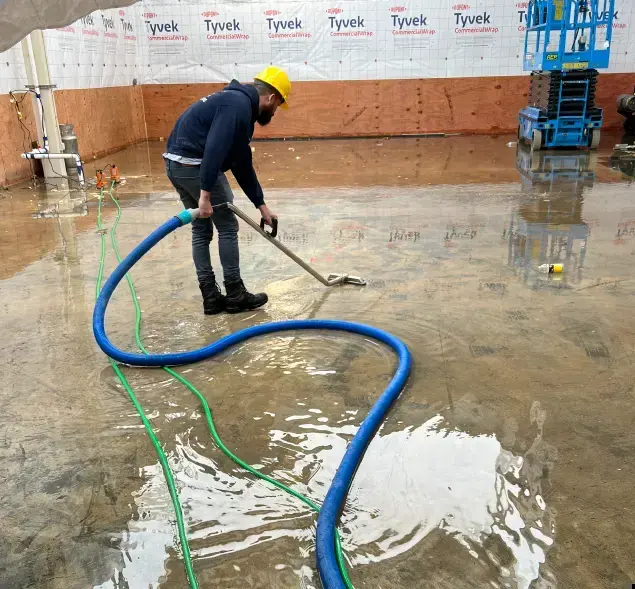
First steps for water extraction and removal in High Point
- 01
Stop the water
Close the main or the valve at the failing fixture so nothing new reaches the floor.
- 02
Lift what you can
Raise furniture, rugs and electronics onto dry surfaces and stay out of water near outlets.
- 03
Photograph the loss
Take wide and close photos of the water, the damaged floors and any labels before anything is moved.
- 04
Call for extraction
Describe the water source and the rooms affected so the crew arrives with the right pumps.
How water extraction and removal is handled in High Point
Extraction is the first job on almost every water loss in High Point, because every inch of water left on a floor keeps soaking into carpet pad, baseboards and subfloor. Heavy rain has moved sewer and creek water around fast here, as in the January 9, 2024 spills, so pulling water out quickly protects the structure.
What does water extraction and removal cost in High Point, NC?
Extraction alone usually costs a fraction of a full restoration, and the range depends on how many rooms are wet and whether the water went under the house. Drying adds to the price when materials stay wet.
One or two wet rooms
- Clean water found early
- Carpet or hard floors
- Crawl space stays dry
Extraction with drying
- Pad lifted or removed
- Several days of drying
- Readings taken each visit
Rooms plus crawl space
- Water ran under the house
- Insulation taken from joists
- Floor dried above and below
Ranges are typical, not a quote: the water category, square footage, material class and how fast drying started move the number most. Run the water damage cost calculator for a closer range.
The water extraction and removal process, start to dry
The tech who does the walkthrough maps moisture before any equipment goes down, so the drying plan matches what is actually wet.
- 1
Map
A moisture meter and thermal camera show where water traveled past the visible edge.
- 2
Extract
Pumps clear the deep water, then wand tools pull the rest from carpet and seams.
- 3
Open and dry
Wet pad comes up and air movers and dehumidifiers go where readings call for them.
- 4
Confirm
Return visits log moisture until each surface reaches its dry target.
How the water comes out
A pump handles the deep water first, then a wand extractor works across the floor and carpet. Pad that has soaked through is usually lifted, because pulling water from the top alone leaves the layer underneath wet. Hard floors are squeegeed and vacuumed toward low spots.
- Submersible pumps clear water that is more than a few inches deep
- Wand extractors lift water out of carpet fibers and from seams
- Hard floors are vacuumed along baseboards and at thresholds
Water that travels under the floor
Water that gets past a threshold can run under hardwood or into a crawl space. Extraction there means checking the subfloor from below and treating any pooled water before it reaches insulation and joists.
Crews also check wall bases near the edge of the wet area, since moisture wicks upward past what is visible.
When the water is not clean
Sewer or creek overflow is contaminated, and so is water from a backed up drain. Those losses get containment, protective gear and disinfectant along with the pumping, and anything porous that touched the water is removed.
- Category three water gets contained
- Porous materials are bagged out
- Surfaces are disinfected after pumping
Trade fact: Carpet pad acts like a sponge, holding water long after the surface feels dry, so lifting it early often saves the carpet above and keeps the subfloor from soaking.
Water extraction and removal across High Point and nearby areas
Extraction crews cover the whole city, from Emerywood and the Uptown Suburbs to Highland Cotton Mills Village and the streets around High Point University, including parts in Davidson and Randolph counties.
The same service nearby: water extraction and removal in Kernersville, Oak Ridge, Summerfield.
Water damage restoration in High Point · every neighborhood covered
Related water damage services in High Point
Water Extraction and Removal questions in High Point, NC
How soon should standing water be removed?
As soon as it is safe. Water that sits overnight soaks into pad, baseboards and subfloor, and the window for mold growth opens within 24 to 48 hours.
Can a carpet be saved after extraction?
Often yes if the water was clean and the pad is lifted promptly. Carpet that sat in sewage or creek water is usually removed instead.
Does extraction include drying the house?
Extraction removes the water you can see. Drying equipment and moisture readings handle what stays in the framing and subfloor, so the two steps usually run together.
What if the water came from a backed up sewer?
That water is contaminated, so the crew contains the area, wears protective gear and disinfects after pumping. Only the restoration crew handles what has already entered the house.
Does a basement or crawl space need different equipment?
Yes. Submersible pumps handle deep water, and low spots under a house may need small extractors and a dehumidifier set up near the joists afterward.
Is water extraction covered by insurance?
Sudden losses such as a burst pipe are often covered, but flood water and slow leaks are treated differently. Photos and the extraction invoice help the adjuster.
Get the water out of your High Point house
Pumps and wand extractors remove the water, then drying equipment keeps the framing from holding on to it.
(888) 578-4720Call about this water loss