Crawl Space Water Damage in High Point
Water under a High Point home soaks insulation, joists and the subfloor out of sight. The crew pumps it out, pulls wet batts, and dries the framing from below with dehumidifiers.
(888) 578-4720Call about crawl space water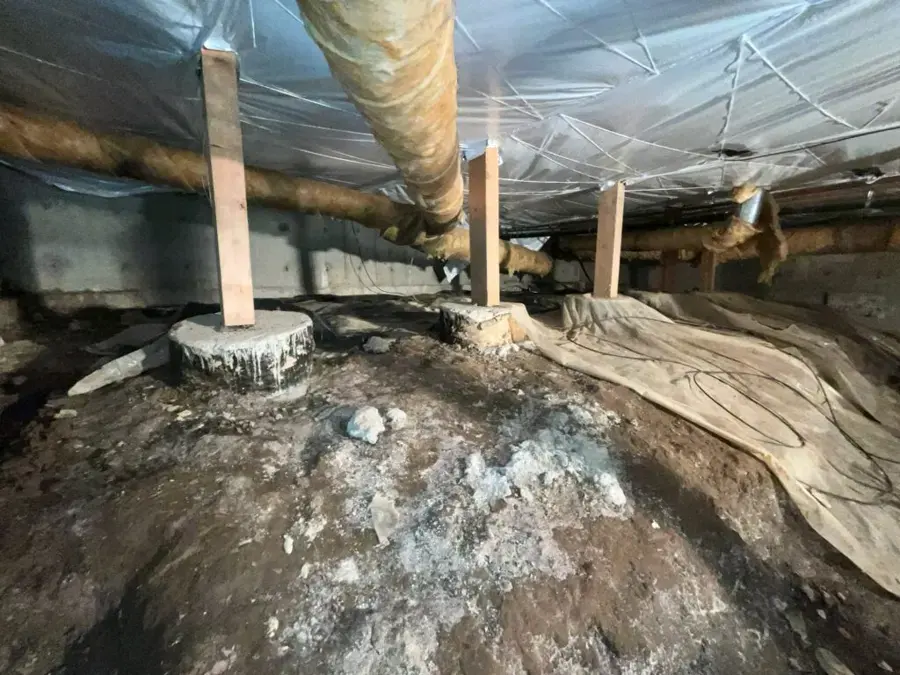
First steps for crawl space water damage in High Point
- 01
Find the water source
Look for a failed pipe or pushing drain and close the valve if there is one.
- 02
Keep power off
Keep power off on circuits through the space and stay out of standing water.
- 03
Photograph from the hatch
Photograph the water, insulation and vapor barrier from the access point before anything moves.
- 04
Call for a pump out
Say how deep the water looks and what caused it so the right pumps arrive.
How crawl space water damage is handled in High Point
A crawl space holds water longer than a room does, because there is little airflow and the ground below stays wet. In a High Point house the real damage is usually to insulation, joists and the subfloor, not the dirt itself. That is why drying at the joists and subfloor, not just pumping, decides how the job turns out.
What does crawl space water damage cost in High Point, NC?
Crawl space cost depends on the type of water and how much insulation and barrier must come out. A clean pump out and drying is the low end, while sewage or storm water under the house climbs well above it.
Pump out and dry
- Clean water found early
- Insulation still dry
- Dehumidifier set under the floor
Insulation and barrier out
- Soaked batts pulled down
- Vapor barrier replaced afterward
- Joists and subfloor dried
Sewage or storm water
- Category three under the house
- Ground surface treated
- Antimicrobial before drying
Ranges are typical, not a quote: the water category, square footage, material class and how fast drying started move the number most. Run the water damage cost calculator for a closer range.
The crawl space water damage process, start to dry
The tech who does the walkthrough maps moisture before any equipment goes down, so the drying plan matches what is actually wet.
- 1
Map
Moisture meter readings on joists and subfloor show how far the water climbed.
- 2
Pump
Submersible pumps clear pooled water, and wet batts are bagged out.
- 3
Dry
Air movers and a dehumidifier run under the house until the wood reads dry.
- 4
Confirm
Final readings on joists and subfloor are logged before insulation or barrier go back.
Getting the water out
The crew enters through the access hatch with a submersible pump and hoses, and clears pooled water first. Wet fiberglass batts are pulled down and bagged, because insulation that stays soaked holds moisture against the framing.
- Pooled water is pumped to a drain point away from the foundation
- Wet batts are removed and the joists are checked for dampness
- A torn vapor barrier is documented before it is lifted
Drying the framing
Joists, sill plates and the underside of the subfloor are read with a moisture meter, then dried with air movers and a dehumidifier set up under the house. The goal is dry wood, not just a dry floor above.
The rooms above are metered as well, because a wet subfloor can leave flooring damp even when the surface looks fine.
When storm or sewer water gets under
Storm runoff or a sewer overflow puts contaminated water under the house. That means the ground surface is treated with antimicrobial, porous materials are removed, and drying begins only after the contamination is handled.
- Category three water is contained first
- Treated surfaces dry before insulation returns
- Replacement waits for dry readings
Trade fact: A vapor barrier laid over wet soil traps moisture, so crews dry the space and the framing before the barrier is replaced rather than after, and new insulation goes in last.
Crawl space water damage across High Point and nearby areas
Crawl space jobs run across High Point homes, from the older streets near Johnson Street and Oakwood to the Uptown Suburbs, Emerywood and Southwest High Point.
The same service nearby: crawl space water damage in Kernersville, Oak Ridge, Summerfield.
Water damage restoration in High Point · every neighborhood covered
Related water damage services in High Point
Crawl Space Water Damage questions in High Point, NC
Is water in a crawl space an emergency?
Yes. Water sitting under a house soaks insulation and wood, and mold can start growing in 24 to 48 hours. Pumping and drying should begin right away.
Does wet insulation have to come out?
Usually, when it is soaked. Fiberglass batts that stay wet hold moisture against the joists and subfloor, so they are removed and replaced after the wood is dry.
Can the vapor barrier stay in place?
A barrier that is intact over dry ground can stay, but a torn or soaked one is lifted so the soil and framing can dry, then replaced later.
What causes water under a High Point house?
Common causes are a split pipe, a leaking water heater, a clogged drain and storm runoff. Which one it was changes how the water is classed and cleaned.
How is a crawl space dried?
A dehumidifier and air movers are set under the house, and readings on the joists and subfloor are taken each visit until the wood reaches its dry target.
Will floors above the crawl space be affected?
They can be. Hardwood and carpet over a wet crawl space may cup or hold moisture, so the rooms above are metered and dried along with the space below.
Is crawl space water covered by insurance?
A sudden pipe or appliance failure is often covered, while groundwater and storm runoff usually are not. The adjuster decides, so keep photos and the drying records.
Dry the space under your High Point home
The crew pumps out the water, pulls wet batts and dries the joists before moisture reaches the floor above.
(888) 578-4720Call about this crawl space