Crawl Space Water Damage in Winston-Salem
Water under a Winston-Salem house hides from view while it soaks joists, insulation and the subfloor. The crew pumps it out, removes wet material and dries the space from underneath.
(888) 578-4720Call about the crawl space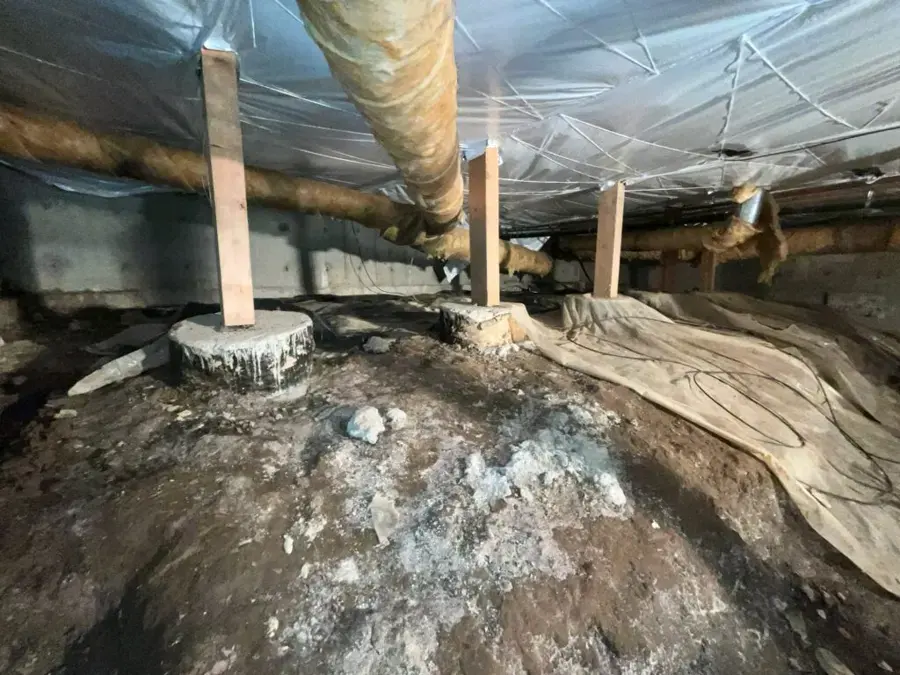
First steps for crawl space water damage in Winston-Salem
- 01
Find the water source
Look for a broken pipe, a running water heater or a downspout dumping near the foundation before anyone goes under the house.
- 02
Stay out of wet wiring
Standing water near ductwork, wiring or a water heater is not safe to enter. Leave the access closed and call.
- 03
Photograph from the opening
Take pictures from the access door or hatch, showing the water level and any torn plastic.
- 04
Call for pump-out
Early pumping keeps insulation and joists from soaking up more water.
How crawl space water damage is handled in Winston-Salem
A crawl space gets wet quietly, and the first sign is often a musty smell or a soft spot in the floor above. Winston-Salem averages 42.5 inches of rain a year, and runoff that finds its way under a house stays there until it is pumped and dried. Catching it early keeps the repair much smaller and the framing intact.
What does crawl space water damage cost in Winston-Salem, NC?
A pump-out with drying in a crawl space runs $1,200 to $3,500. Removing wet insulation and the vapor barrier raises that to $3,500 to $8,000, and sewage or storm water under the house can reach $15,000.
Basic pump-out and drying
- Water was clean and recent
- Batts stayed dry
- Dehumidifier set below the floor
Insulation and barrier removal
- Wet batts taken down
- Barrier replaced afterward
- Joists and subfloor dried
Sewage or storm water
- Category 3 under the house
- Soil surface treated
- Antimicrobial before drying
Ranges are typical, not a quote: the water category, square footage, material class and how fast drying started move the number most. Run the water damage cost calculator for a closer range.
The crawl space water damage process, start to dry
The tech who does the walkthrough maps moisture before any equipment goes down, so the drying plan matches what is actually wet.
- 1
Inspect
The crew documents depth, source and material damage from the access opening.
- 2
Pump
Standing water is extracted, and wet insulation comes down.
- 3
Treat
Soil and framing get antimicrobial treatment when the water was contaminated.
- 4
Dry
Dehumidifiers run beneath the floor until readings match dry wood.
What the crew checks first
Before pumping, the crew looks at the water source, the depth, the state of the insulation and whether the vapor barrier has torn. The goal is to separate a simple rain intrusion from a pipe leak or a sewage problem.
- Depth and source of the water are recorded
- Insulation between joists is tested for moisture
- Wood moisture readings are taken at the joists and subfloor
Removal and drying
Standing water goes first, then wet insulation that has dropped or soaked through is pulled down and bagged. Dehumidifiers and air movers run under the house while the subfloor is dried from below.
Wood framing is usually kept when it dries promptly, and the structural drying method used indoors applies under the house too.
When the water is not clean
Storm water and sewage carry bacteria into the soil surface and the wood. Those jobs call for containment, antimicrobial treatment before drying and removal of anything that cannot be cleaned.
- Plastic containment at the access point
- Antimicrobial applied to wood and soil
- Affected insulation discarded, not dried
Trade fact: Dry framing can still sit above damp soil, so a torn vapor barrier or a drainage problem can bring the moisture back after drying is finished.
Crawl space water damage across Winston-Salem and nearby areas
Crawl space work covers West End, Old Salem, West Salem and Ardmore, along with parts of the city that drain toward Salem Creek, Peters Creek and Silas Creek.
The same service nearby: crawl space water damage in Kernersville, Oak Ridge, High Point.
Water damage restoration in Winston-Salem · every neighborhood covered
Related water damage services in Winston-Salem
Crawl Space Water Damage questions in Winston-Salem, NC
Is a wet crawl space an emergency?
Standing water is, since it soaks insulation and wood and can carry bacteria if it came from a sewer or storm. Damp soil with no pooled water is less urgent but still worth a check.
Can the insulation under the floor be saved?
Insulation that stayed dry can remain. Batts that are soaked or hanging down are removed because they hold moisture against the subfloor and rarely dry in place.
Why does the crawl space flood after heavy rain?
Runoff can collect when the ground slopes toward the house or a downspout drains close by. Winston-Salem receives 42.5 inches of rain in an average year, so the pattern repeats.
Do crews put a new vapor barrier in?
Replacing the vapor barrier is usually handled as a repair after drying. The restoration crew removes the torn sheet when it is wet and documents it for the claim.
How long does a crawl space take to dry?
Most spaces need several days of dehumidifier time, and the readings decide when equipment leaves. Wet soil and a missing barrier can stretch that.
Is it safe to go under the house after a flood?
Standing water near wiring, ducts or a water heater is a shock and bacteria risk, so the space should be left closed until a crew assesses it.
Get the crawl space pumped and dried
The crew pumps out, removes wet insulation and dries the joists and subfloor from below, with readings logged daily.
(888) 578-4720Call a Winston-Salem crew