Structural Drying and Dehumidification in Winston-Salem
Wet framing, subfloor and walls need controlled drying before repairs begin. Winston-Salem crews place air movers and dehumidifiers, take daily readings and keep equipment running until the structure is dry.
(888) 578-4720Call about drying equipment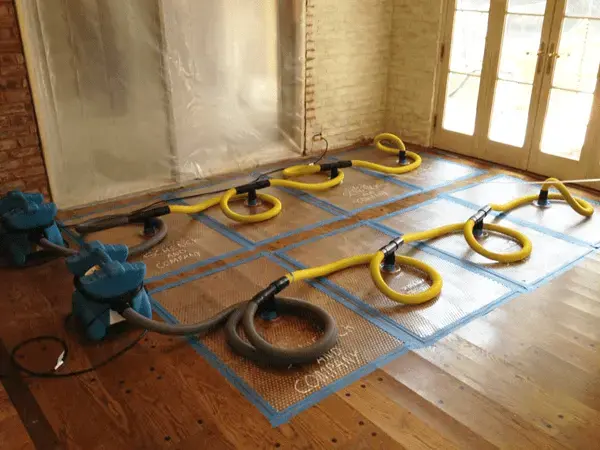
First steps for structural drying and dehumidification in Winston-Salem
- 01
Stop the water
Make sure the source is off and no more water is entering the structure.
- 02
Remove standing water
Extraction should be done before drying so the equipment dries the materials, not a flooded floor.
- 03
Keep the home closed
Close windows and doors so dehumidifiers pull moisture from the structure, not outside air.
- 04
Call for drying
Call a crew to map the moisture and set the right equipment.
How structural drying and dehumidification is handled in Winston-Salem
Drying is not a matter of opening windows and waiting. Wood, drywall, concrete and subfloor each give up water at a different pace, and the only way to know a structure is dry is to measure it against a dry reference reading. Winston-Salem has warm, humid summers, which slow drying when dehumidifiers are not used.
What does structural drying and dehumidification cost in Winston-Salem, NC?
Drying one or two rooms usually costs $1,200 to $3,500. A floor plus the crawl space runs $3,500 to $8,000, and a whole level or a hardwood floor with heavy materials can reach $18,000.
Small loss in one or two rooms
- Light wetting of walls and floors
- Air movers and a dehumidifier
- A few days of drying
Floor and crawl space
- Drying above and below the floor
- Several dehumidifiers running
- Wall cavities dried too
Whole level or hardwood
- Dense materials holding water
- Desiccant dehumidification
- Floor mat systems on hardwood
Ranges are typical, not a quote: the water category, square footage, material class and how fast drying started move the number most. Run the water damage cost calculator for a closer range.
The structural drying and dehumidification process, start to dry
The tech who does the walkthrough maps moisture before any equipment goes down, so the drying plan matches what is actually wet.
- 1
Map
Moisture readings set the baseline for each wet material.
- 2
Place
Air movers and dehumidifiers go where the map shows water.
- 3
Monitor
Readings are taken daily and equipment is moved or removed.
- 4
Release
Equipment leaves when every material meets its dry standard.
Older buildings, older materials
The West End Historic District covers 229 acres and is mostly residential, with most buildings built between 1887 and 1930. Older materials such as thick framing and solid wood flooring can hold water differently from modern drywall, so they get their own readings.
- Small losses use air movers and a single dehumidifier
- Hardwood and dense materials use mat systems
- Large or deep losses use several dehumidifiers or desiccant units
How the equipment is placed
Air movers push dry air across wet surfaces while dehumidifiers pull the moisture out of the room. Equipment is placed from the moisture map, not by guesswork, and is moved as the readings change. Drying follows water extraction on almost every loss.
Knowing when it is dry
The crew records the moisture content of each wet material daily and compares it with an unaffected reference. Equipment leaves only when each material reaches its dry standard.
- Daily readings on every wet material
- Equipment adjusted as areas dry
- Final readings saved for the file
Trade fact: Surfaces that feel dry can still hold moisture inside, so a meter reading, not touch, is the only reliable test that drying is finished.
Structural drying and dehumidification across Winston-Salem and nearby areas
Structural drying covers West End and its older homes, Old Salem, Reynolda Village and Ardmore, along with Downtown Winston-Salem buildings and commercial areas near Salem Parkway and Reynolda Road.
The same service nearby: structural drying and dehumidification in Kernersville, Oak Ridge, High Point.
Water damage restoration in Winston-Salem · every neighborhood covered
Related water damage services in Winston-Salem
Structural Drying and Dehumidification questions in Winston-Salem, NC
What is the difference between drying and dehumidifying?
Air movers speed up evaporation at the surface, and dehumidifiers remove that moisture from the air. Both are needed to dry materials thoroughly.
Why do dehumidifiers run for days?
Wood, concrete and subfloor release water slowly, so the equipment keeps pulling moisture out until readings reach a dry standard.
Can walls be dried without opening them?
Often yes. Small holes at the base let air reach the cavity, and removal is saved for wet insulation or drywall that cannot recover.
Will drying the house raise the power bill?
Yes, equipment uses power for several days. The drying log records how long each unit ran, which helps when the claim is reviewed.
How do the crews know the job is finished?
Moisture meters give a reading for each wet material, and the final numbers must match the dry reference. Those readings are saved for the file.
Dry the structure to a real standard
The crew maps the moisture, sets equipment and takes daily readings until framing, floors and walls read dry.
(888) 578-4720Call a Winston-Salem crew