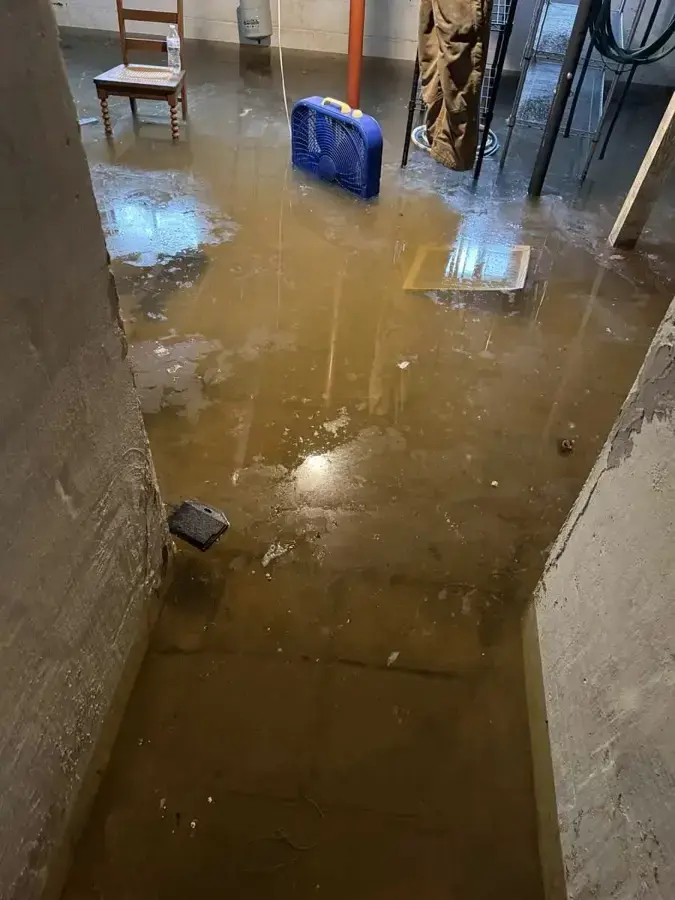
When heavy rain pushes a creek over its banks, or sends water backing up through drains, the water that enters a house is not the same as a leak from a pipe. In High Point, creeks such as Richland Creek and Payne Creek have carried overflow in past storms, and cleanup after that kind of water follows stricter rules.
Key takeaways
- Storm and creek water is treated as contaminated, so porous materials that soaked it up are usually removed, not dried in place.
- On January 9, 2024, heavy rain caused four High Point wastewater spills totaling about 79,000 gallons, with Richland Creek and Payne Creek receiving the overflow.
- Stay out of the water, turn off power only from a dry panel, and keep children and pets away.
- Extraction, cleaning and antimicrobial treatment come before drying equipment is set.
- Flood hazard maps and data are available through the city Engineering Services Department and the North Carolina Flood Risk Information System.
Why storm and creek water is different
A burst supply pipe puts clean water in a house. Storm runoff and creek overflow cross yards, streets and storm drains first, so they carry soil, oil, debris and sometimes sewage.
That is why a storm and flash flood cleanup in High Point is handled as a contaminated water job, with different steps from a plumbing leak.
The difference shows up in the cleanup plan. A clean leak is a drying job, while a contaminated flood is a removal, cleaning and drying job, in that order.
- Clean water from a supply pipe can often be dried in place if it is caught early.
- Storm and creek water carries soil and bacteria into carpet, pad and drywall.
- Sewer overflow adds a further hazard, so any backup is treated with extra care.
- Anything porous that soaked up the water is usually removed.
- Creek water can leave silt that dries into a hard film on floors.
What the January 2024 spills showed
High Point sits in two major watersheds and gets about 46 inches of precipitation a year. Heavy rain on January 9, 2024 caused four wastewater spills totaling about 79,000 gallons.
Those spills went into creeks, not into homes. They are a useful reminder of how fast sewer and creek water can move around the city when heavy rain arrives.
City water crews respond to water complaints and repair water and sewer mains, and the city says they are on call on holidays too. That is the right contact for a main or a manhole problem, while a cleanup crew handles the damage inside the house.
- About 22,000 gallons spilled at Elon Place into Richland Creek.
- About 19,000 gallons each spilled on Woodbrook Drive and on Otteray Avenue into Payne Creek.
- About 19,000 more spilled at Woodbrook Drive and West Farriss Avenue.
- In 2026, about 7,500 gallons spilled into a tributary of Rich Fork Creek after grease obstructed the sewer.
What not to do in the first day
The urge after a flood is to start cleaning right away. A few mistakes at this point make the cleanup larger and put people at risk.
Treat the water as contaminated until a crew has said otherwise.
- Do not wade through the water without boots and gloves.
- Do not run the furnace or air handler, because it can move contaminated air through the ducts.
- Do not use a household vacuum on standing water.
- Do not eat food that touched the water, and do not wash dishes in tap water until you know it is safe.
- Do not let children or pets play in the wet area.
- Do not touch electrical equipment while standing in water.
- Do not mix cleaning chemicals, which can release harmful fumes.
First steps inside the house
Safety comes before anything else. Standing water near outlets, a panel or a water heater is a shock risk.
If the panel is dry and reachable, switch off power to the wet areas, and photograph everything before it is moved.
Record the water
Take photos of the water mark on walls, the damaged contents and the source if it is visible.
Note when the water arrived and where it came from, because that detail matters for the cleanup and for any claim.
Lift what can be lifted
Raise furniture legs onto blocks or foil, and move small items to higher shelves.
Leave heavy items alone if lifting them is not safe.
Protect your health
Wear waterproof boots, gloves and a mask if you must enter. Wash hands and any skin that touched the water with soap and clean water.
People with cuts, children and anyone with a weak immune system should stay out of the area.

What extraction and cleaning remove
The crew starts with water extraction in High Point, pulling standing water from floors and low spaces.
After that, silt is removed, surfaces that touched the water are cleaned, and contaminated porous material is taken out.
Hard furniture can often be cleaned and kept. Upholstered pieces and mattresses that touched the water are usually discarded.
- Carpet and pad that soaked up storm water are removed.
- Wet drywall and insulation are cut out to above the water mark.
- Hard surfaces are cleaned and treated with antimicrobial.
- Contents that cannot be sanitized are listed and discarded.
- Insulation under floors and in crawl spaces that the water reached.
- Air handler parts that ran during the flood are cleaned or replaced.
When sewage is part of the picture
Heavy rain can push sewer water back through floor drains and cleanouts. High Point crews respond to overflowing cleanouts and manholes, and the city requires its sewer collection system to be cleaned annually.
If the water in the house smells of sewage or came up through a drain, the work moves into sewage backup cleanup in High Point, with containment and removal of anything the water touched.
Drying, and checking local flood information
Once the contamination is cleaned up, dehumidifiers and air movers dry the slab, framing and any remaining materials, and readings show when it is done.
For flood hazard questions, the city Engineering Services Department can provide flood plain panel maps, and the North Carolina Flood Risk Information System offers public flood hazard data. The High Point restoration team can explain how the cleanup fits into the rest of the repair.
Materials left wet lose strength and invite trouble, so the drying plan names which materials stay and which go, with readings to back it up.
- Surface water buffers are generally required along streams in High Point.
- Richland Creek in Southwest High Point is the focus of a green infrastructure plan for stormwater.
- An engineering study looked at flooding and stream bank instability in four residential neighborhoods.
Questions
Why can't storm water be dried in place like a pipe leak?
Storm water carries soil, bacteria and debris. Porous materials that soak it up cannot be made clean by drying alone, so they are removed.
Did the January 2024 spills flood High Point homes?
The recorded spills went into Richland Creek and Payne Creek. They show how heavy rain can move sewer and creek water, not that homes were flooded.
Can I turn on the heating system after a flood?
Not until it has been checked. Running the air handler can spread contamination through the ducts.
Where can I find flood hazard maps for High Point?
The city Engineering Services Department can provide flood plain panel maps, and the North Carolina Flood Risk Information System has public data.
Does a restoration crew handle both the water and the sewage?
Yes. The crew extracts the water, removes contaminated material, cleans and treats surfaces, and dries the structure.
How long does storm water cleanup take?
It depends on how much water came in and what it touched. Extraction comes first, then removal, cleaning and drying, with readings deciding when the work is done.