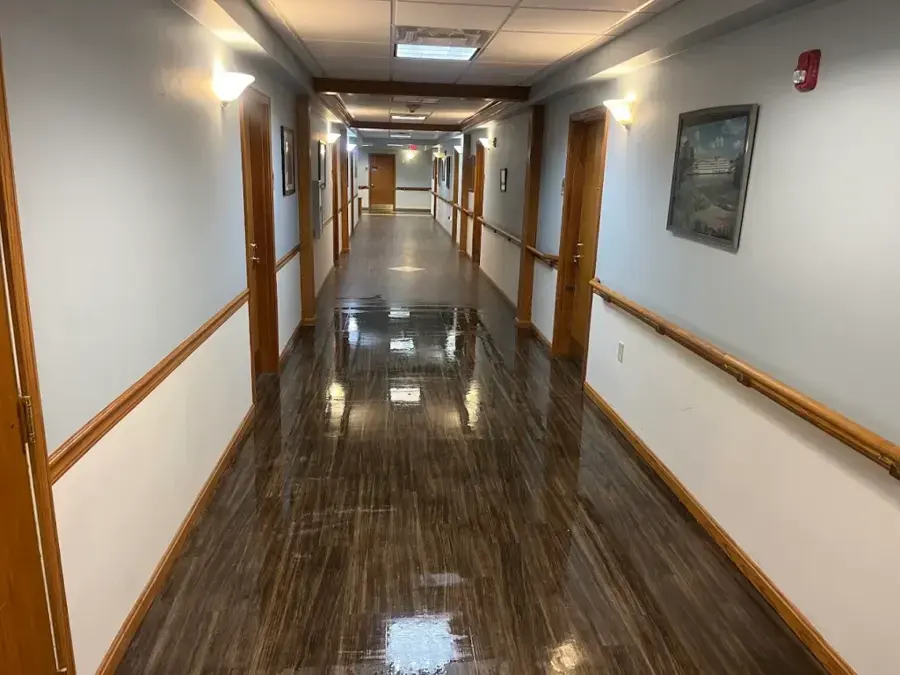
Downtown Winston-Salem has seen streets fill with water before. For a business owner, the first day after a flash flood decides how much inventory is saved and how soon the doors can open again.
Key takeaways
- Past floods put feet of water on downtown streets, so ground floor spaces are a known risk.
- Flood water is treated as contaminated, which changes what can be saved.
- Photos, an inventory list and a record of times protect an insurance claim.
- Commercial drying is phased so one area can reopen while another is still drying.
- Call for extraction before pulling out stock or carpet tile, so wet items are documented.
Why downtown flooding is a known pattern
Winston-Salem averages 42.5 inches of rain a year, and some storms release a lot of it fast. On June 19, 1996, three feet of water collected downtown at Poplar and First Streets after 3 or more inches of rain.
On September 27, 2004, several blocks of downtown flooded and one apartment complex was evacuated. On April 17, 1998, a slow thunderstorm dropped 2 to 2.5 inches of rain and flooded Reynolda Road at Wake Forest University and areas along Interstate 40 and US 52.
Creek flooding has also hit commercial property. On July 29, 2003, Little Creek overflowed in Winston-Salem and damaged an apartment complex and a furniture store, and on March 20, 2003, flooding along Muddy Creek, Mill Creek and Grassy Creek brought water rescues and $150,000 in property damage.
The city stormwater page lists 15 sub watersheds, which shows how many small creeks feed the larger ones. A business near any of them has reason to know its risk.
- The city drains mainly through Salem Creek, Peters Creek, Silas Creek and Muddy Creek.
- Heavy downpours can overwhelm streets and storm drains before creeks rise.
- Ground floor shops, restaurants and offices take water first.
- Apartment complexes and furniture stores have been hit by creek overflow, so commercial and residential buildings share the risk.
Safety first, cleanup second
Before anyone starts moving stock, make sure the building is safe. Standing water in a commercial space can hide electrical panels, floor drains and loose tiles.
Keep staff and customers out until the power question is settled.
A flooded commercial building often has more hazards than a house, including walk in coolers, shelving, stored chemicals and electronics. Treat each one as unsafe until it is checked.
- Turn off power to the affected area only if the panel is dry and reachable.
- Do not use gas appliances or heaters that sat in the water.
- Treat the water as contaminated, because it came from the street, a creek or a drain.
- Wear boots and gloves, and keep food and open products away from the water.
- Do not start a generator indoors or run extension cords through water.
- Keep children and pets out of the building.
What to document before anything is moved
A business owner has two jobs on day one: save what can be saved and record what cannot.
Photographs and a simple list protect the claim and help the crew decide what to dry in place.
If the business has an inventory system, export the current stock list before power fails again. If it does not, a walk through with a phone camera, aisle by aisle, works as a rough record.
Stock and equipment
Photograph shelves, counters, inventory and equipment with the water level visible.
Lift paper goods, electronics and fabric above the water, and list what was wet.
Records and systems
Move paper records, computers and servers out of the water if it is safe to do so.
Keep a log of times, calls and decisions, because the order of events matters later.
Extraction and removal in a ground floor space
The crew pulls standing water first, then removes carpet tile, wet drywall and anything that cannot be sanitized.
A commercial water damage job in Winston-Salem also asks which areas must reopen first, so the work can be planned in zones.
Commercial buildings add complications that a house does not have, such as shared walls, suspended ceilings and tenant spaces next door. The crew works out which areas share air and water paths before drying starts.
- Standing water is pulled from floors and low spaces.
- Silt and debris are removed from hard floors.
- Carpet tile, base and wet drywall are removed and discarded when contaminated.
- Hard surfaces are cleaned and treated with antimicrobial.
- Ceiling tiles that were soaked or stained are removed so wet insulation above can dry.
- Cabinets, counters and display fixtures are checked for trapped water at the base.
Storm water treatment and drying
Water from a flash flood is handled under storm and flash flood cleanup in Winston-Salem practice, with containment between wet and dry areas.
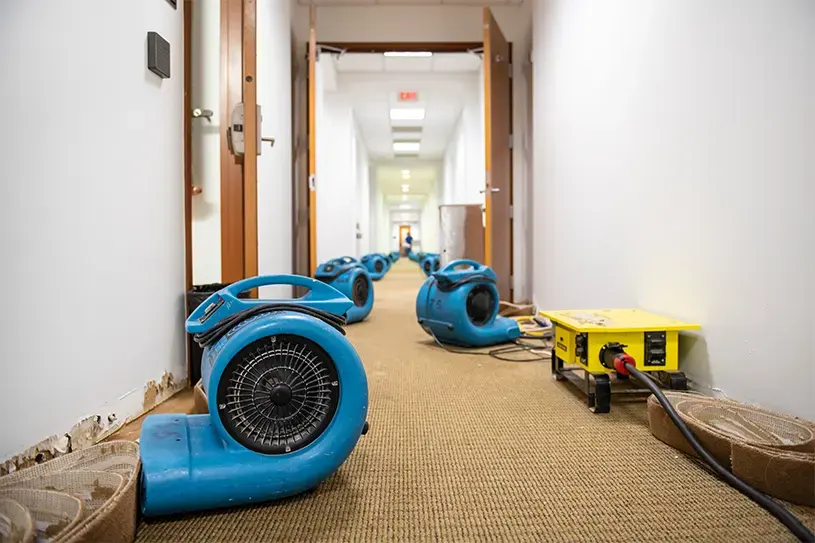
After the cleanup, structural drying in Winston-Salem uses dehumidifiers and air movers with daily readings, and drying can run overnight so the shop can keep trading.
Commercial drying is monitored the same way as in a house, with daily readings, but across more rooms and more building materials. The logs are the record that the space is dry before anyone rebuilds.
- Containment keeps dust and contamination out of dry zones.
- Phased drying lets one section reopen while another dries.
- Documentation of readings and removed materials supports repairs and claims.
Working with landlords and insurers
Many downtown businesses lease their space, so the owner and landlord both need a record of what happened.
Share photos and the drying plan with both, and ask the landlord who handles building systems such as the roof, drains and shared walls.
An insurer will usually ask for a timeline, photographs, an inventory and proof of the drying work. A single folder, kept from the first day, makes that conversation much easier.
Keeping customers, staff and suppliers informed
A flooded shop is also a communication problem. Customers need to know whether the doors are open, and staff need to know whether they are working.
A short, plain message works better than silence, and it can be posted on the door and on the business page.
A business that keeps a log of calls and messages also builds the paper trail that an insurer will want to see.
- Tell staff where to go and when to expect an update.
- Contact suppliers about pending deliveries so wet stock does not pile up.
- Tell customers whether the business is closed, partly open or moving online.
- Ask the landlord about shared building systems, such as the roof drains and sprinklers.
Questions
Has downtown Winston-Salem really flooded?
Yes. Records include three feet of water downtown on June 19, 1996, and several downtown blocks flooded on September 27, 2004.
Can I keep my stock if it got wet?
Some hard goods can be cleaned and dried. Paper, fabric and food that touched flood water are often discarded, so photograph everything first.
Is flood water from a downtown street safe?
No. It can carry sewage, oil and debris, so treat it as contaminated and keep it away from food and skin.
Can the business stay open during drying?
Often part of it can. Containment and phased drying let a dry zone reopen while another section is still being worked.
Who pays for flood cleanup?
That depends on the lease and the insurance policy. Photos, an inventory list and the drying records help whoever pays.
Do flood cleanup crews work in phases for a commercial building?
Yes. Zones are cleaned, dried and cleared one at a time, so a dry area can reopen while another zone is still being dried.