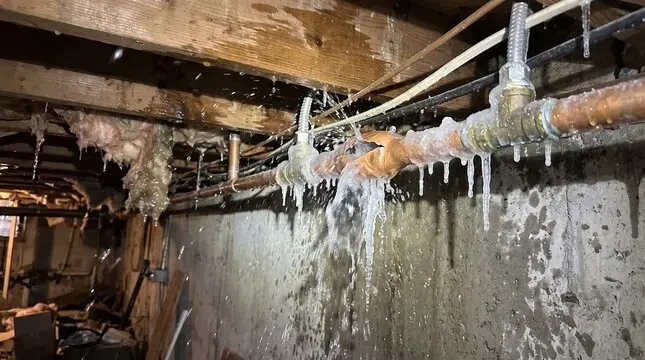
Guilford County declared a local state of emergency effective at noon on January 22, 2026, ahead of a winter storm expected to bring significant snow and ice and power outages. For Summerfield homes on private wells, a storm like that can mean two problems at once: pipes that freeze, and pumps that stop when the power goes out.
Key takeaways
- A January 2026 storm brought snow, sleet and freezing rain to the Triad, with icy conditions expected to linger for days.
- A 2018 regional water study said private well pumps most likely go offline when the power goes out.
- Preparing before the freeze, with a drip, open cabinets and a known shutoff, costs far less than a repair.
- When the thaw or the power returns, check for leaks before leaving the house.
- A split pipe is shut off, extracted and dried, and drying is confirmed with readings.
What a winter storm sets up for Summerfield homes
A major winter storm in January 2026 brought snow, sleet and freezing rain to the Triad, and icy conditions were expected to linger for days. Guilford County declared its emergency ahead of the storm, warning of snow, ice and power outages.
This post does not claim any Summerfield pipe burst occurred. It uses the storm as a reminder of what a long cold spell can do to a house.
Summerfield is a large, spread out town, and by 2000 half of all the housing ever built there had gone up in the 1990s, so many homes are mature, though pipe materials are not confirmed.
- Ice and cold can last for days, not just a single night.
- Power outages stop heating and well pumps.
- Icy roads can delay a plumber or a crew, so preparation matters.
Why well homes face a double problem
A January 2019 news article said Summerfield lacks municipal water and sewer, so houses rely on septic tanks and well water. A 2018 regional study added that when power goes out, private systems' well pumps most likely go offline.
That means a house can lose water pressure during an outage while its pipes are freezing. When power returns, the pump restarts and pushes water into any pipe that split while it sat frozen.
Most owner occupied housing in Summerfield is single family detached, and plans favor large lots, so each house usually has its own water and wastewater arrangements and its own risks.
- No power means no pump and no running water.
- A cold house with no heat lets pipes in walls and garages freeze.
- A split pipe can leak only after the thaw, or after power comes back.
- A pump that restarts into a broken pipe can run water for a long time.
Before the freeze: simple steps that help
Most freeze damage is avoidable. A few small jobs before a storm protect pipes where they are most exposed.
The best ones are cheap and take only a short time.
- Find and test the main shutoff, and for a well, the pump breaker and the pressure tank valve.
- Insulate exposed pipes in the garage, crawl space and outside walls.
- Open cabinet doors under sinks on exterior walls so warm air reaches the pipes.
- Let a faucet drip when temperatures drop well below freezing.
- Disconnect and drain outside hoses, and cover outdoor spigots.
- Know where a plumber's number is saved before roads ice over.
- Keep the thermostat above the lowest safe setting if you leave home.
- Seal gaps where pipes, cables and vents enter the house.
During an outage
If the power goes out and the house starts to cool, the goal is to keep water out of the pipes that are likely to freeze.
Think of it as protecting the house while it is unattended and cold.
Keep warmth where the pipes are
Close off rooms you are not using and keep the family in a smaller warm area.
Open the cabinets and interior doors near the coldest pipes.
Consider draining the system
If the house will be cold for days, shutting off the supply and draining the pipes lowers the risk of a split.
On a well, switch off the pump at the breaker first so it does not restart into drained pipes.
Use water carefully when it returns
When the pump restarts, open a faucet slowly and let air escape. Then check the pressure tank and the fittings before running appliances.
Watch for pressure that falls fast, which can mean water is leaking somewhere.
After the thaw or when power returns
A frozen pipe that split often shows nothing until the ice melts. When the temperature rises or the power and pump come back, water finds the crack.
Check the house before you leave it alone again.
Icy conditions can slow a plumber or a restoration crew, so a quick shutoff and a set of photos help while you wait.
- Listen for running water when no fixture is on.
- Look at ceilings, wall bottoms and under sinks for new stains or drips.
- Watch the pressure tank and the pump on a well for constant cycling.
- Check the water heater area and the garage for wet floors.
If a pipe does split
Shut off the supply right away, and on a well, switch off the pump. Then photograph the damage and call for help.
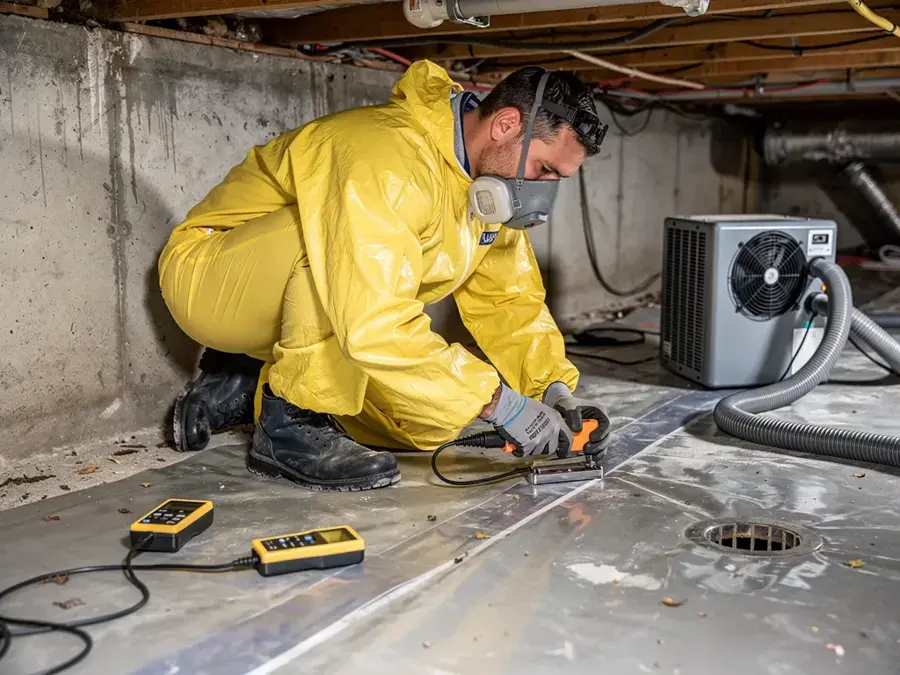
A frozen pipe water damage crew in Summerfield extracts the water, removes wet material that cannot dry and sets drying equipment, with moisture readings to show when it is done.
The structural drying in Summerfield step comes after removal, with air movers and dehumidifiers running until readings show the framing is dry.
- Standing water is extracted from floors and carpet.
- Wet insulation and sagging ceiling drywall are removed.
- Framing and subfloor are dried with air movers and dehumidifiers.
Ice, trees and the roof
Guilford County's emergency warned of downed trees as well as snow and ice, and a damaged roof can let water into an attic or ceiling.
A storm and roof leak water damage crew in Summerfield deals with that water, and the Summerfield restoration team can explain how roof leaks and frozen pipes are dried differently.
- Tarps keep rain and melting snow out until the roof is repaired.
- Wet attic insulation is removed if it is soaked.
- Ceilings that are stained or sagging are checked with a moisture meter.
Questions
Why do well pumps matter in a winter storm?
A 2018 regional study said private well pumps most likely go offline when the power goes out, which leaves a house without water pressure.
Should I let faucets drip?
Yes, when temperatures drop well below freezing. A slow drip keeps water moving and lowers the chance of ice in the pipe.
Can a pipe split without any water showing?
Yes. Ice can crack a pipe while it is frozen, and the leak only appears after the thaw or when the pump restarts.
Who handles the pipe repair and who handles the water?
A plumber repairs the pipe. The restoration crew extracts the water, removes wet material and dries the structure.
Did Summerfield have burst pipes in the January 2026 storm?
This post does not claim that. The storm is used as an example of the cold, ice and outage risk that homes can face.
Is a frozen pipe cleaned up the same way as a roof leak?
The steps overlap. Both involve extraction, removal of wet material and drying, but a roof leak also needs the opening covered and the attic checked.