Most of Guilford County's small towns grew up without a city sewer, and Stokesdale is one of them. When wastewater backs up into a Stokesdale home, the source is the home's own septic system, and that changes who fixes what.
Key takeaways
- Stokesdale does not operate a public sewer system, and the town reports 0 sewer connections.
- The town reports 798 water connections that use septic systems, so a backup is traced to a private system.
- A septic backup indoors is contaminated water and is handled with containment and removal of porous materials.
- A septic contractor deals with the tank and the field; the restoration crew deals with the house.
- Stop using water in the house and keep people and pets out of the wet area.
What no public sewer means in Stokesdale
The Town of Stokesdale runs its own municipal water system, buying treated water from Winston-Salem/Forsyth County Utilities. It does not run a public sewer system, and its water connections that use septic systems number 798.
The town code also says development is limited by the need for individual on site sewer disposal systems. Put simply, the wastewater from a Stokesdale house goes into a private system on the property, not into a city sewer main.
The town's water system served about 1,780 people in 2023 and reported 712 residential metered connections. The town describes itself as a rural community, so on site wastewater systems are part of normal life there.
- There is no public sewer main for a utility to clear.
- A backup is traced to the home's own tank, field or plumbing.
- A sewage backup cleanup in Stokesdale deals with the indoor damage, while a septic contractor deals with the system itself.
Signs the septic system is backing up
Backups rarely start with a flood. Most begin with small changes in how the house drains.
If several of the signs below show up together, treat it as a septic problem and stop using water.
A single slow drain is often a local blockage in one fixture. When the whole house is slow, the cause is usually further along, in the tank, the pipe to it or the field.
- Drains that run slowly in more than one fixture.
- Gurgling sounds from toilets or tubs when the washer runs.
- Sewage odor inside the house or in the yard.
- Wastewater coming up through a floor drain or the lowest tub or shower.
- Wet or unusually green ground over the septic field.
First steps when wastewater comes up indoors
Wastewater from a septic backup is contaminated. It can carry bacteria and viruses, so the first steps are about limiting spread and exposure.
Work through the steps below, and keep your hands out of the water.
Do not try to pump or flush the tank yourself, and do not pour chemicals down the drains hoping to clear it.
- Stop using water in the house, including the washer, dishwasher and showers.
- Do not flush toilets, because more water goes into the same system.
- Keep children and pets out of the wet area.
- Open windows if the weather allows, and do not run the furnace fan over the area.
- Photograph the wet floors and the drain that backed up.
- Call a septic contractor for the system and a restoration crew for the indoor cleanup.
Who does what after a backup
A septic backup has two parts, and they are handled by two different trades. Knowing the split saves time and avoids paying for the wrong fix first.
The order matters too, because the system should be pumped and corrected before more water goes into it.
The septic contractor
The septic contractor pumps the tank, checks the system and finds the reason for the backup.
This is also the person to ask whether the field is failing or whether a blockage caused it.
The restoration crew
The crew extracts the wastewater that came into the house, removes materials that soaked it up, and cleans and treats the surfaces.
The crew then dries the structure and checks it with moisture readings, so the repair can begin on a clean, dry base.
Why the order matters
If the crew cleans the house before the system is pumped and corrected, the same wastewater can come back and undo the work.
Fixing the system first, then cleaning, gives the repaired floors a chance to stay clean.
What comes out of the house
Wastewater is a Category 3 loss, and porous materials that touched it are not kept. The goal is to remove the contaminated material and leave a clean, dry structure.
The crew starts with water extraction in Stokesdale to pull standing wastewater, then moves to removal.
Hard floors such as tile and sealed concrete can be cleaned and treated in place. Porous and absorbent materials are different, because contamination soaks into them.
- Carpet, pad and rugs that took in wastewater.
- Drywall and baseboards wet above the floor.
- Insulation in walls or floors that was reached.
- Cabinet bases and particle board that swelled.
- Soft furnishings that cannot be sanitized.
Cleaning, drying and rebuilding
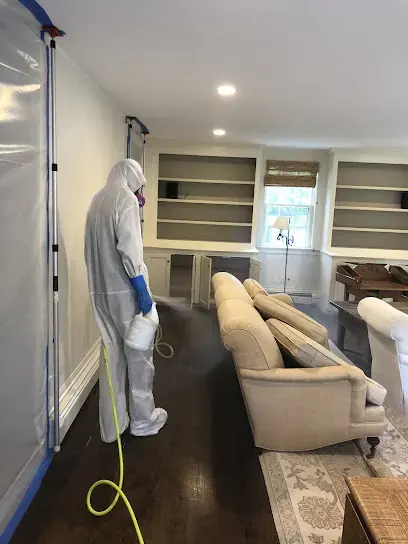
After removal, hard surfaces and framing are cleaned and treated with antimicrobial, and containment keeps the work area separated from the rest of the house.
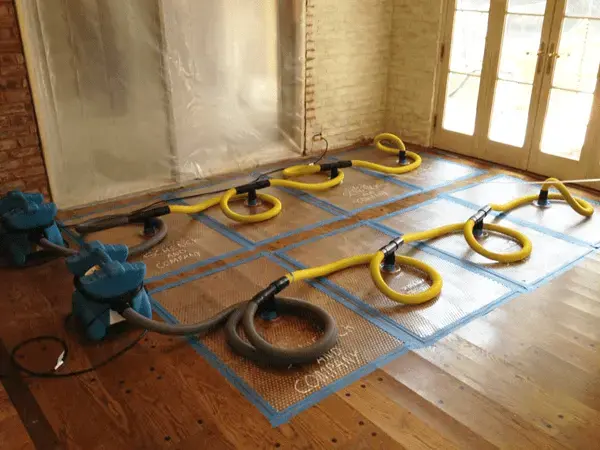
Then structural drying in Stokesdale takes over, with dehumidifiers, air movers and daily readings until the framing is dry.
- Containment sheeting controls dust and odor during removal.
- HEPA air scrubbing cleans the air in the work area.
- Antimicrobial treatment is applied to framing and subfloor after removal.
- Moisture readings confirm the structure is dry before rebuilding.
Keeping the system healthy afterward
A backup is a good time to look at what goes down the drains. Grease, wipes and other debris cause many blockages in sewer systems, and they cause problems in septic systems too.
The Stokesdale restoration team can explain the cleanup, while the septic contractor advises on pumping schedules and system care.
On July 29, 2026 the town asked residents to conserve water after a 24 inch main break in eastern Forsyth County. Using less water is also easier on a septic system.
- Keep grease, wipes and paper towels out of toilets and drains.
- Spread laundry loads across the week instead of running many at once.
- Keep vehicles and heavy equipment off the septic field.
- Keep a record of when the tank was last pumped.
Questions
Does Stokesdale have a public sewer system?
No. The town does not operate a public sewer system and reports 0 sewer connections. Homes use septic systems for wastewater.
Who do I call first for a septic backup?
Call a septic contractor for the system and a restoration crew for the indoor cleanup. Stop using water in the house while you wait.
Is septic backup water dangerous?
Yes. It is contaminated and can carry bacteria, so avoid contact and keep children and pets away.
Can carpet that got wet from a septic backup be saved?
Usually not. Carpet and pad that soaked up wastewater are removed, because drying alone does not make them clean.
How is a septic backup cleanup different from a clean water leak?
It needs containment, removal of porous materials and antimicrobial treatment before drying starts.
Can the restoration crew pump my septic tank?
No. That is a septic contractor's job. The crew handles the wastewater and the damage inside the house.